
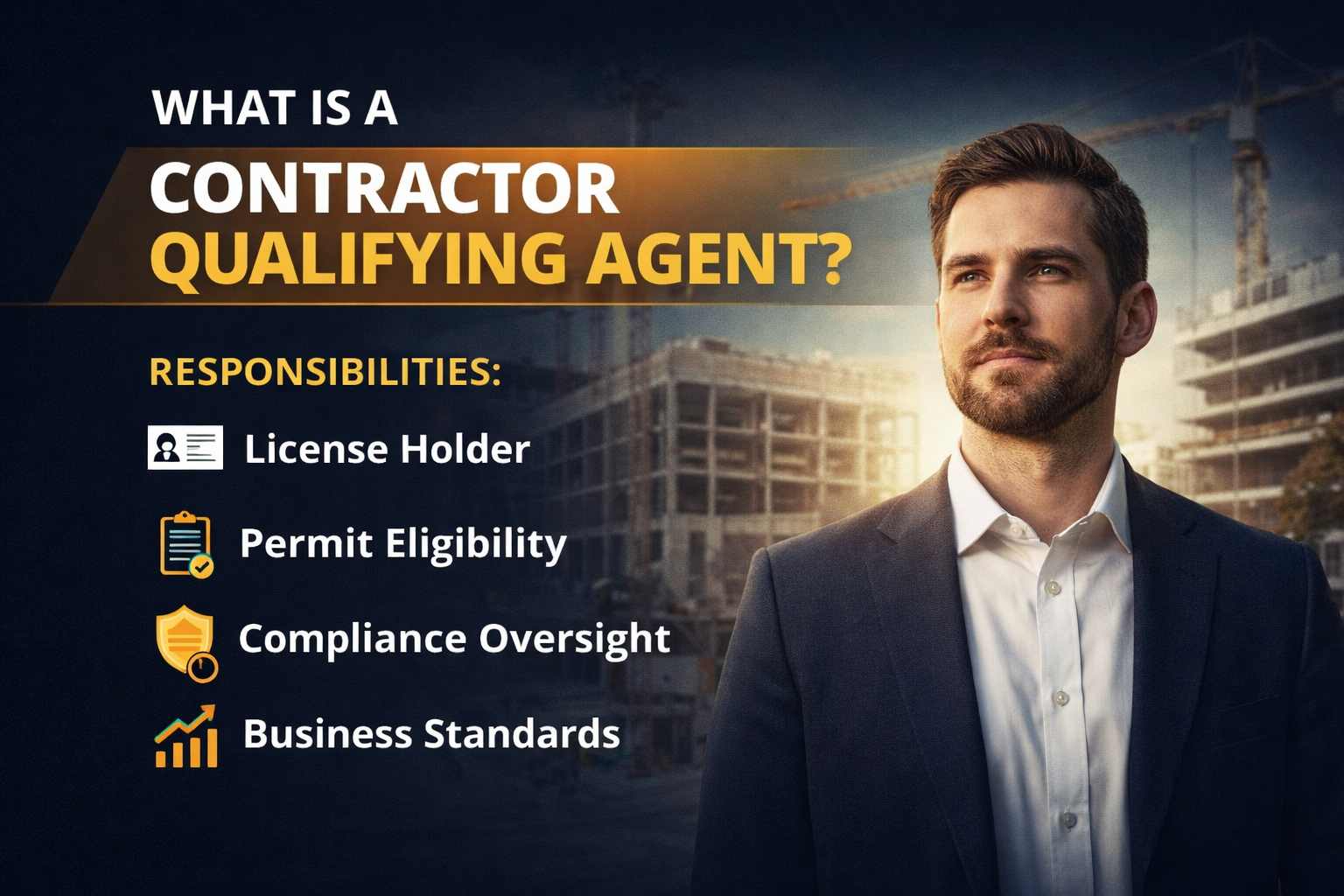
If you are running or planning to start a construction business in Florida, there is one role you simply cannot ignore — the contractor qualifying agent. Many business owners focus on projects, clients, and revenue, but overlook the legal foundation that allows them to operate in the first place.
This role forms the foundation of your business.
Without this role properly in place, your business may not legally function, pull permits, or complete construction work. And more importantly, mistakes in this area can lead to heavy penalties, project delays, and even loss of business credibility.
In this guide, we will break down exactly what a licensed professional is, why this role matters, and what responsibilities come with it so you can make informed decisions for your construction business.

What is a contractor qualifying agent?
A licensed contractor is officially responsible for a construction company’s operations under their license. In simple terms, this person allows a business to legally perform construction work by qualifying it with their credentials.
In Florida, a company cannot legally operate as a contractor unless it links itself to a licensed individual. That licensed individual acts as the contractor qualifying agent.
This means the license does not just stay with a person — the qualifying agent connects it directly to the business. The state recognises this individual as the person responsible for all construction activities the company performs.
Why is a contractor qualifying agent essential for your business
Many contractors underestimate the importance of a contractor qualifying agent until they face compliance issues. This role is not just a formality or paperwork requirement. It is a legal necessity that protects both your business and your clients.
Here is why this role is critical:
Legal authorisation to operate
Without a contractor qualifying agent, your business cannot legally:
- Apply for permits
- Take up construction contracts
- Perform licensed work
Operating without proper qualification can result in fines, legal action, and project shutdowns.
Accountability and compliance
The contractor qualifying agent ensures that your business follows all state laws, building codes, and safety regulations. This reduces the risk of violations that could harm your reputation and finances.
Trust and credibility
Clients, developers, and authorities trust businesses that are properly licensed and compliant. Having a contractor qualifying agent in place shows that your business operates professionally and legally.
Types of contractor qualifying agents
Understanding the different types of contractor qualifying agent roles can help you choose the right structure for your business.
Primary qualifying agent
A primary qualifying agent is directly employed by the company and actively involved in its operations. This is the most common setup for established businesses.
Secondary qualifying agent
A secondary qualifying agent may qualify additional business entities but must still meet legal requirements. This arrangement is often used when a contractor is associated with multiple businesses.
External or hired qualifying agent
Some businesses hire an external contractor qualifying agent when they do not have a licensed contractor within the company. While this is allowed, it must follow strict rules to ensure active supervision and compliance.

Key responsibilities of a contractor qualifying agent
The responsibilities of this role go far beyond lending a license. It carries legal, operational, and ethical duties that directly impact the business.
1 Supervising construction work
A contractor qualifying agent must actively supervise all construction activities carried out by the company.
This includes:
- Monitoring job sites
- Ensuring quality standards
- Verifying compliance with building codes
Passive involvement is not acceptable. The qualifying agent must be genuinely involved in operations.
2 Ensuring compliance with laws and regulations
One of the most important responsibilities of a contractor qualifying agent is ensuring that the business follows all legal requirements.
This includes:
- State licensing laws
- Safety regulations
- Local construction codes
Any violation can lead to penalties for both the company and the qualifying agent.
3 Managing permits and documentation
The contractor qualifying agent is typically responsible for obtaining permits and ensuring that all documentation is accurate.
This means:
- The license is used for approvals
- The agent is linked to the project legally
- Errors can lead to serious consequences
4 Overseeing business operations
In many cases, this role also involves overall business operations.
This can include:
- Reviewing contracts
- Approving project execution
- Ensuring operational standards
5 Taking legal responsibility
The most critical responsibility of a contractor qualifying agent is legal accountability.
If something goes wrong, the qualifying agent may:
- Face legal action
- Be fined or penalised
- Risk losing their license
This is why the role should never be taken lightly.
Common mistakes contractors make

Many businesses misunderstand this role, which leads to serious issues.
Treating it as a formality
Some contractors believe that simply having a name attached to the license is enough. This is incorrect. The qualifying agent must be actively involved.
License renting
One of the biggest mistakes is “renting” a license without proper supervision. This practice is illegal and can lead to severe penalties.
Lack of oversight
When this role is not involved in daily operations, compliance risks increase significantly.
Who needs a contractor qualifying agent
You need a contractor qualifying agent if:
- You are starting a construction business
- You do not have a personal contractor license
- You want to expand your business into licensed work
- You are entering the Florida construction market
How to choose the right contractor qualifying agent
Choosing the right professional is crucial to your business’s success.
Look for experience
An experienced qualifying agent understands:
- Construction processes
- Legal requirements
- Risk management
Verify licensing
Always ensure that the contractor’s qualifying agent holds a valid, active license in Florida.
Ensure active involvement
The qualifying agent should be willing to:
- Supervise projects
- Stay involved in operations
- Take responsibility seriously
Benefits of working with the right contractor qualifying agent
When you have the right professional in place, your business benefits in multiple ways:
- Smooth project approvals
- Reduced legal risks
- Better operational efficiency
- Stronger business credibility
How Contractor Qualifier Connect can help

Finding the right construction license holder can be challenging, especially if you are new to the industry.
This is where Contractor Qualifier Connect comes in.
We help businesses:
- Connect with verified licensed professionals
- Ensure full compliance with Florida laws
- Set up their business legally and efficiently
Instead of risking mistakes, you get expert support that helps your business grow with confidence.
Final thoughts
A qualifying contractor is not just a requirement — it is one of the most important roles in your construction business.
This role impacts every aspect of your company, from legal compliance to operational oversight. If you ignore it or handle it incorrectly, you risk serious consequences.
On the other hand, choosing the right licensed contractor gives your business a strong legal foundation, allowing you to focus on growth, projects, and long-term success.