
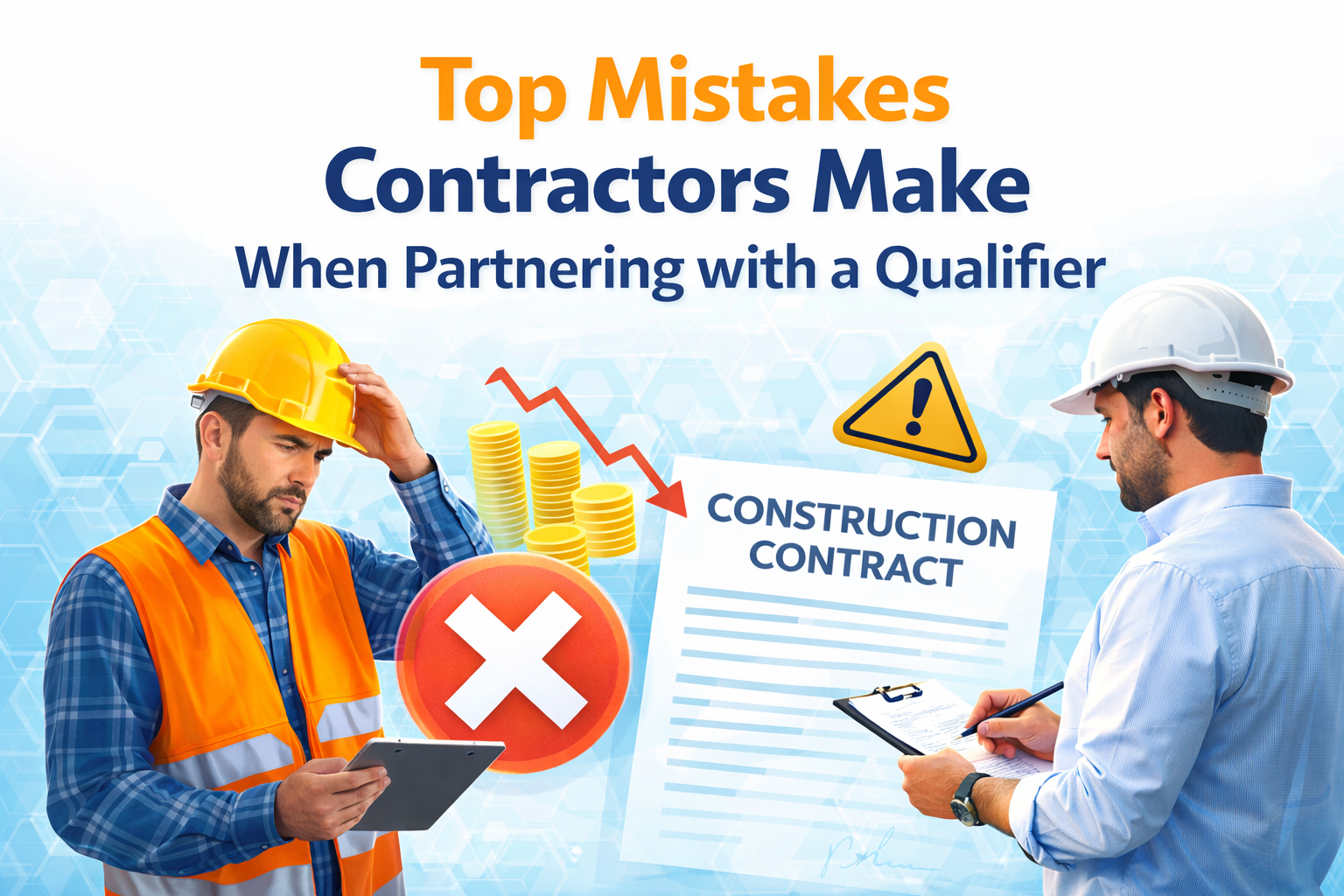
For a lot of contractors, partnering with a certified qualifier is the difference between bidding on major projects and sitting on the sidelines. Whether you’re trying to secure a qualifier so you can expand into new trades, meet state licensing rules, or move into larger markets, choosing the right person matters more than most contractors realize. A qualifier isn’t just a name on paperwork — they’re the backbone of your legal compliance. And when that partnership goes sideways, so does your business.
If you’re using platforms like Contractor Qualifier Connect or a wider Qualifier Network, it’s important to know what traps to avoid. Here are the most common mistakes contractors make when searching for and partnering with a qualifier—and how to avoid them so you can move fast, stay compliant, and build sustainably.
1. Rushing the Process to “Just Get Licensed”
Plenty of contractors feel the pressure to get licensed ASAP—especially in competitive states like Florida, California, North Carolina, Texas, and Georgia. But desperation leads to sloppy decisions.
When you’re trying to secure a qualifier quickly, it’s tempting to grab the first person who says yes. That’s how contractors end up with unverified credentials, unreliable communication, or someone whose license doesn’t even align with the work being performed.
Before signing anything, confirm:
- The qualifier holds an active, unrestricted license.
- Their license is valid for the specific state:
- Their licensing classification matches your business scope.
Speed is good; blind trust isn’t.
2. Not Verifying the Qualifier’s Experience and Track Record
A license alone doesn’t prove someone is qualified to represent your business. A solid qualifier should understand fieldwork, regulations, inspections, business operations, and realistic risk—for example, what it takes to maintain a Florida general contractor license or a Texas general contractor license at scale.
Common red flags:
- No verifiable project history
- Vague explanations about past roles
- No references
- Gaps in license activity
A quick search or conversation with past contractors they’ve worked with saves you from massive headaches later. Contractor Qualifier Connect vets the qualifier Experience and track record carefully.
3. Ignoring State-Specific Requirements
Every state has its own flavor of bureaucracy. A qualifier who’s great in Florida might be useless in Texas if they don’t understand the rules.
For example:
- State contractor license Florida requires financial stability metrics, continuing education, and specific business structures.
- Contractor license Texas varies by city and may not require statewide licensing for general contractors, but specialty trades do have strict rules.
- General contractor license Georgia requires exams, background checks, and specific project limits depending on classification.
Failing to match your qualifier’s expertise to your state’s requirements leads to delays, app rejections, and even fines.
Pro tip: Use platforms built for multi-state navigation—like Contractor Qualifier Connect—so you can filter by exact licensing requirements.
4. Assuming the Qualifier Handles Everything
A qualifier is a key piece of the puzzle, but they’re not your business manager. Many contractors make the mistake of assuming the qualifier will:
- Manage compliance paperwork
- Handle renewals
- Respond to state boards
- Oversee jobsite operations
But the legal responsibility often falls on both the qualifier and the business owner. If neither side understands who’s doing what, the entire business risks falling out of compliance.
Set expectations in writing:
- Who files renewals ?
- Who communicates with regulatory agencies ?
- Who oversees field operations ?
- Who monitors insurance requirements ?
A qualifier partnership is teamwork, not delegation by default.
5. Not Understanding the Financial Liability
Qualifiers attach their personal license—and reputation—to your business. That means they often assume financial and legal risk.
Some contractors try to negotiate terms without understanding the weight of what they’re asking a qualifier to take on. Others don’t explain their project scope clearly, which puts qualifiers on edge and can lead to sudden withdrawals.
If you want a long-term, dependable relationship:
- Be transparent about project size, revenue, staffing, and job types.
- Make sure both sides understand the risk structure.
- Put protections in place so the qualifier doesn’t shoulder unfair exposure.
Trust is built through clarity, not assumptions.
6. Not Using a Reputable Qualifier Network
Trying to find a qualifier through random forums or word-of-mouth can feel like wandering in the dark. Too many contractors rely on old-school methods when modern platforms make this process safer and faster.
Using a vetted Qualifier Network or a service like Contractor Qualifier Connect helps you:
- Verify licenses instantly
- Match with certified qualifiers based on your state
- Avoid scammers
- Secure a qualifier faster
- Reduce compliance risks
If you’re still DM’ing strangers on social media trying to “find certified qualifier” options, you’re playing the game on hard mode.
7. Not Setting Clear Communication Expectations
A good qualifier partnership thrives on consistent communication. A lot of contractors get burned when their qualifier goes silent, slow, or unresponsive—especially during inspections, renewals, or license audits.
Solve this by establishing:
- Preferred communication method
- Response time expectations
- Monthly or quarterly check-ins
- Reporting procedures for jobsite activity
The smoother your communication, the smoother your compliance. Try Personalised Consultation with Certified Consultant which can save you thousands of dollars.
8. Treating the Qualifier Relationship as Disposable
Qualifiers aren’t temporary add-ons. They’re long-term strategic partners who help your business grow. Too many contractors bounce between qualifiers, chase cheaper deals, or treat their qualifier like a formality.
But here’s the truth:
Stable qualifier relationships make your business look stronger to state boards, lenders, and clients.
Switching frequently sends the opposite signal.
Build the relationship. Invest in it. Value it.
Final Thoughts: Strong Qualifier Partnerships Create Stronger Contractors
Finding the right qualifier—and keeping that relationship healthy—is a major competitive advantage. Whether you’re expanding into Florida, applying for a Texas general contractor license, or leveling up with a Georgia general contractor license, the right partnership keeps you compliant, scalable, and credible.
If you want to avoid all the headaches listed above, use a trusted network like Contractor Qualifier Connect. It gives you access to a verified pool of professionals, helping you secure a qualifier quickly and confidently.
The goal isn’t just to get licensed. The goal is to build your business on a foundation that lasts.