

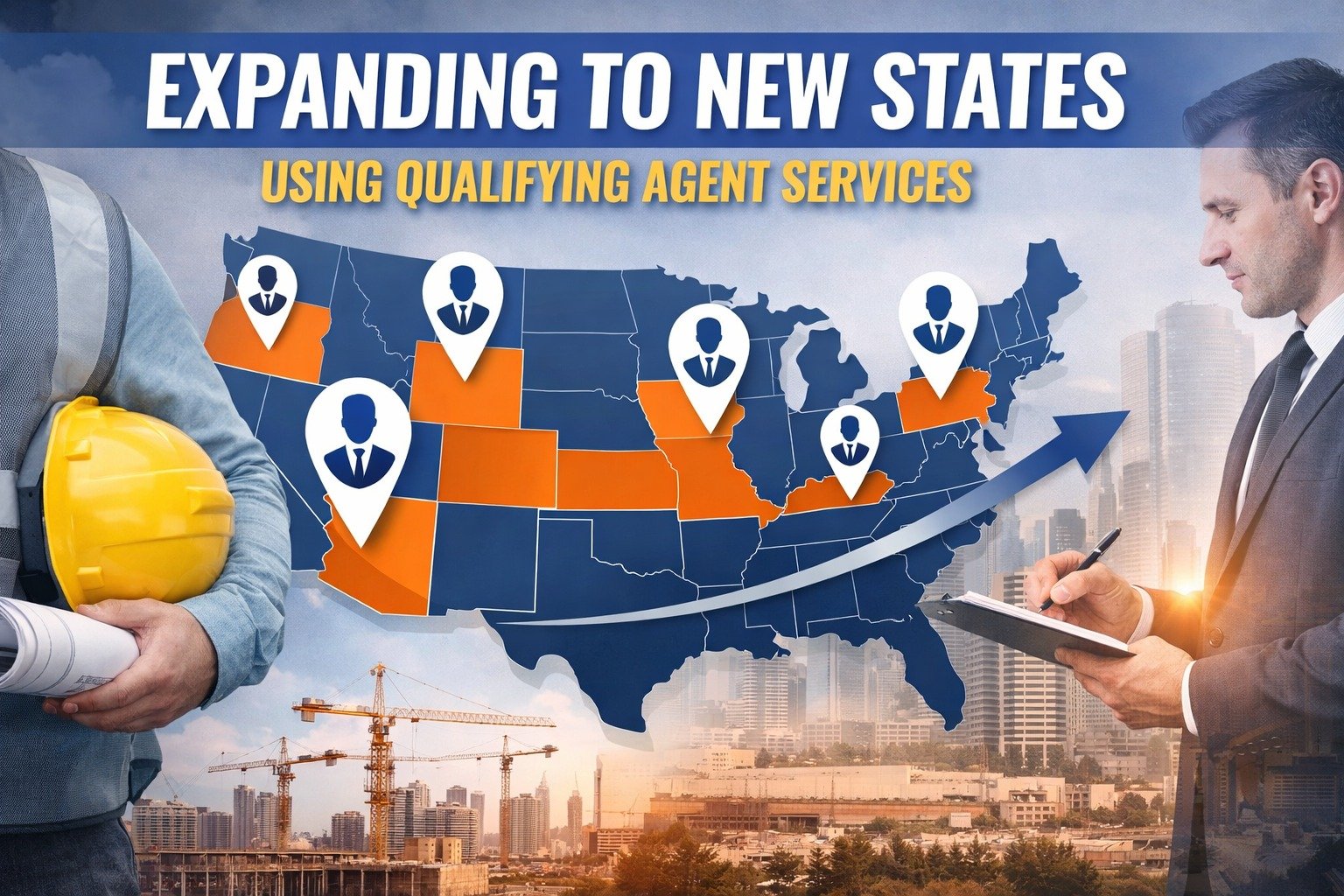
Introduction
Scaling a construction business beyond state borders is a major milestone — but it also comes with regulatory challenges that many contractors underestimate. Licensing laws in the United States are highly state-specific, and operating without proper credentials can lead to heavy penalties, project shutdowns, and reputational damage.
This is where qualifying agent services become a powerful growth enabler.
By leveraging a contractor license qualifier, construction firms, investors, and developers can legally expand operations, bid on larger projects, and enter high-demand markets without navigating years of licensing processes themselves.
In this guide, we’ll break down how qualifying agent services work, why they matter for multi-state expansion, and how they help construction companies scale faster and more compliantly.
Understanding Qualifying Agent Services
A qualifying agent (also called a contractor license qualifier or licensed contractor partner) is an individual who holds an active contractor license in a specific state and allows a construction company to operate under their license, as permitted by state regulations.
These professionals meet all licensing requirements, including:
- Trade exams
- Experience thresholds
- Financial responsibility criteria
- Insurance and bonding compliance
By partnering with a licensed contractor qualifier, businesses gain legal authorisation to perform construction work in that state.
This model is widely used by:
- General contractors
- Real estate developers
- Construction investors
- Out-of-state firms entering new markets
Why Expansion Requires Licensing Compliance
Every U.S. state has unique contractor licensing laws. For example:
- Some require trade exams
- Others mandate years of verified experience
- Many require in-state business registration
- Certain states require financial statements and bonding
Without meeting these conditions, companies cannot legally:
- Pull permits
- Bid on public projects
- Sign construction contracts
- Hire subcontractors
This makes contractor license compliance services essential when scaling geographically.

The Fastest Way to Expand: Contractor Qualifier Connect
Traditional licensing routes can take months — sometimes years.
Using qualifying agent services, businesses can:
- Enter new states quickly
- Start bidding on projects sooner
- Avoid exam delays
- Reduce administrative burden
Instead of waiting to secure a license internally, companies partner with a construction license qualifier who already meets regulatory requirements.
This accelerates go-to-market timelines significantly.
Key Benefits of Expanding Using Qualifying Agent Services
1. Speed to Market
Entering a new state through conventional licensing can delay expansion plans. A contractor license holder for hire enables immediate operational readiness.
This speed advantage is critical when pursuing:
- Government tenders
- Commercial builds
- Infrastructure contracts
2. Legal Compliance
Operating without a license exposes firms to:
- Financial penalties
- Lawsuits
- Contract termination
A licensed contractor qualifier ensures full regulatory compliance, protecting your company legally and financially.
3. Cost Efficiency
Obtaining licenses internally involves:
- Exam fees
- Training costs
- Application processing
- Time investment
Partnering with a qualifying agent for construction companies reduces these overheads while delivering the same legal authorisation.
4. Multi-State Scalability
Construction firms expanding regionally often require multiple licenses.
With multi-state qualifying agent services, businesses can operate across territories such as:
- Florida
- California
- Texas
- Georgia
- North Carolina
This creates a scalable licensing model aligned with growth goals.
How Qualifying Agent Services Work
While processes vary by state, the general structure includes:
Step 1: Business Evaluation
The qualifier reviews:
- Business structure
- Project scope
- License classification needed
This ensures proper alignment with state regulations.
Step 2: Agreement Formation
A legal agreement is drafted outlining:
- Roles and responsibilities
- Compliance obligations
- Duration of partnership
- Liability coverage
This formalises the contractor qualifier partnership.
Step 3: License Association
The qualifier’s license becomes associated with the construction company through the state licensing board.
This authorises the firm to:
- Pull permits
- Execute projects
- Hire labor
Step 4: Ongoing Compliance Management
Many contractor license compliance services also assist with:
- Renewals
- Insurance updates
- Regulatory filings
Ensuring uninterrupted operations.
Industries That Benefit Most
Using a licensed contractor partner is especially valuable for:
Real Estate Developers
Developers building across states require licensed contractors to execute projects legally.
Construction Startups
New firms without a licensing history can enter markets faster with a contractor license qualifier.
Investors
Passive investors launching construction ventures often rely on qualified agent services rather than obtaining licenses themselves.
Commercial Contractors
Companies bidding on hotels, malls, and industrial builds use qualifiers to meet compliance requirements.
State Expansion Opportunities
Let’s explore why firms expand using qualifiers in high-growth states.
Florida
Florida’s booming real estate and tourism sectors create high construction demand. However, licensing exams and experience thresholds can delay entry, making Florida contractor license qualifier services highly valuable.
California
Strict regulations and classification systems make California licensing complex. Partnering with a California contractor qualifier simplifies expansion.
Texas
With rapid infrastructure growth, Texas offers lucrative opportunities. A Texas construction license holder enables faster project acquisition.
Georgia & North Carolina
These states are emerging construction hotspots, where qualifying agent services help firms establish early market presence.
Compliance Risks Without a Qualifier
Attempting expansion without licensing support can result in:
- Permit denials
- Project shutdowns
- Legal prosecution
- Insurance claim rejection
Many states impose severe fines for unlicensed contracting — reinforcing the need for licensed contractor qualifier partnerships.
Qualifier vs Employee License Holder
Some firms consider hiring licensed employees instead of external qualifiers.
However, using a contractor license holder for hire offers:
- Faster onboarding
- No long recruitment cycles
- Flexible contractual terms
- Immediate license leverage
This makes qualifiers more practical for rapid expansion.
Choosing the Right Qualifying Agent Services Partner
When selecting a provider, evaluate:
Experience
Look for proven history in construction license qualifier services.
State Coverage
Ensure they support licensing in your target expansion regions.
Compliance Support
Top providers assist with filings, renewals, and documentation.
Legal Structuring
Well-structured agreements protect both the business and the qualifier.

Strategic Growth Advantages
Using qualifying agent services isn’t just about compliance — it’s about strategy.
Firms gain the ability to:
- Enter competitive markets early
- Scale without licensing bottlenecks
- Win multi-state contracts
- Build national presence
This licensing model supports aggressive growth trajectories.
Future of Multi-State Construction Expansion
As infrastructure demand rises across the U.S., more firms are expanding interstate.
The reliance on contractor qualifier connect is growing due to:
- Labor shortages
- Licensing complexity
- Rising compliance enforcement
Businesses that adopt qualifier partnerships early gain a competitive advantage.
Case Use Scenario
Imagine a mid-size contractor operating in Nevada wanting to enter Florida’s hospitality construction sector.
Without a qualifier:
- Licensing could take 12–24 months
- Projects would be lost to competitors
With a licensed Florida qualifier from Florida Qualifier Connect:
- Market entry becomes immediate
- Bidding can begin within weeks
- Revenue pipelines accelerate
This illustrates the tangible ROI of qualifying placement services.
Conclusion
Expanding a construction business across state lines is one of the most effective ways to scale revenue — but licensing barriers often slow momentum.
By partnering with a contractor Qualifier Connect, firms can overcome regulatory hurdles, maintain compliance, and unlock new project opportunities faster.
From startups and investors to established contractors, qualifying placement services provide the legal infrastructure needed for sustainable multi-state growth.
As construction demand continues rising nationwide, leveraging licensed contractor qualifiers will remain a cornerstone strategy for companies aiming to expand efficiently and competitively.
If you’re planning to scale operations, enter new territories, or bid on out-of-state projects, partnering with the right qualifying placement services provider can fast-track your expansion while keeping you fully compliant.
Start building your multi-state construction footprint — legally, strategically, and confidently.